

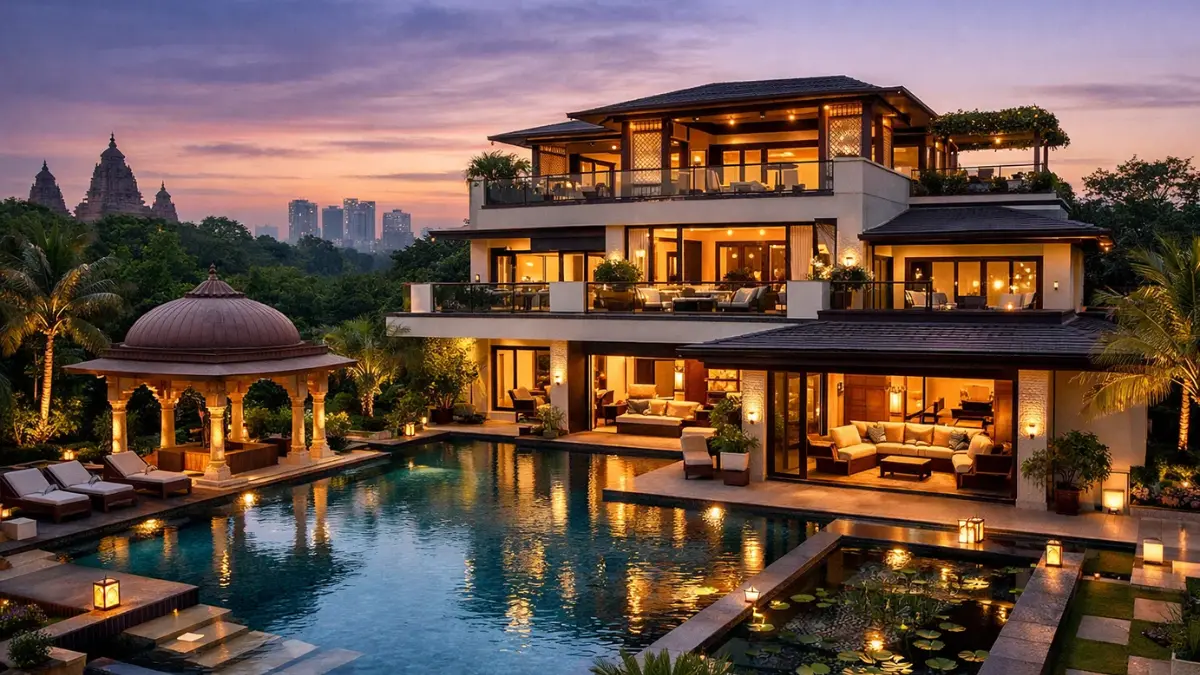
India’s luxury residential real estate segment has emerged as a standout performer in recent years, reflecting strong buyer confidence, rising affluence, and evolving lifestyle preferences. In 2026, luxury home sales in major metro cities continue to outpace broader market growth, driven by high-net-worth individuals (HNWIs), non-resident Indian (NRI) buyers, and lifestyle-focused families seeking premium living spaces.
This trend highlights how India’s most expensive housing tiers are increasingly shaping the real estate landscape — particularly in cities like Mumbai, Delhi-NCR, Bengaluru, Hyderabad, and Pune.
What Defines a “Luxury Home” in India?
The definition of a luxury home can vary by city but typically includes:
Larger floor areas and premium layouts
High-end finishes and smart home features
Branded or exclusive developments
Prime locations (city centers or premium micro-markets)
Exclusive amenities (pools, concierge, private green space)
In India, properties priced above ₹2 crore–₹5 crore and beyond — depending on the city — are generally considered luxury segment offerings. Larger metros with higher land costs and aspirational demand often command even higher price thresholds.
Rising Demand Trends Across Major Metros
Mumbai Metropolitan Region (MMR)
Mumbai remains the largest luxury housing market in India. High net worth buyers — including business owners, corporate executives, and global Indians — continue to invest in premium addresses such as South Mumbai, Bandra-Kurla Complex (BKC), and Worli.
Supply in these micro-markets is limited due to land scarcity, which sustains pricing power and investor interest.
Delhi-NCR
Luxury demand in Delhi-NCR is driven by:
Corporate relocation and executive housing needs
Affluent families upgrading from mid-segment homes
Demand for larger apartments and gated communities
Areas like Gurgaon’s Golf Course Road, Delhi’s Lutyens’ Zone, and Noida’s premium sectors continue to fetch strong prices.
Bengaluru
Bengaluru’s luxury market has grown due to expanding IT and startup ecosystems. Premium homes near Whitefield, Indiranagar, and Sarjapur Road attract buyers seeking upscale design, lifestyle amenities, and proximity to tech hubs.
Hyderabad
Hyderabad is experiencing a notable rise in luxury residential sales. With steady economic growth, global IT investments, and rising income levels, premium projects in Jubilee Hills, Gachibowli, and Banjara Hills have seen strong absorption.
Pune
Pune’s luxury segment has gained traction, particularly in areas such as Koregaon Park, Viman Nagar, and Baner. Buyers are increasingly opting for high-end projects with expansive layouts and resort-style amenities.
What’s Driving the Surge in Luxury Sales?
1. Rising Affluent Population
India’s HNWI population has grown significantly — creating a larger base of luxury home buyers. Wealth accumulation, business growth, and global exposure are contributing to greater investment in premium real estate.
2. NRI Participation
Non-Resident Indians remain a key demand source for luxury homes. Many NRIs seek luxury properties as personal residences, investment assets, or long-term commitments to India’s growing economy.
3. Lifestyle & Space Preferences
Post-pandemic priorities have shifted toward larger living spaces, open layouts, and premium amenities — all of which are prominent features of luxury projects.
Buyers are also prioritizing:
Private wellness centers
Personalized concierge services
Smart home automation
Enhanced security systems
These lifestyle requirements further elevate demand for luxury offerings.
4. Investor and Wealth Preservation Demand
Luxury properties are increasingly seen as wealth preservation plays — offering both rental income potential and long-term appreciation, especially in metro pockets with limited supply.
5. Infrastructure and Connectivity
Metro expansions, new expressways, and improved airport connectivity enhance the appeal of premium locations, pushing prices upward and attracting luxury buyers.
Price Trends in the Luxury Segment
Luxury home price growth in 2026 remains robust and largely resilient, even when broader market segments see moderate appreciation.
Price dynamics reflect:
High entry costs due to scarce land availability
Strong willingness to pay for prime locations
Premium amenities and bespoke architectural design
Increased cost of construction materials
While overall residential price appreciation may average moderate levels, luxury tiers often outpace these figures due to limited supply and high demand.
Comparison with Broader Markets
While the affordable and mid-income housing segments are driven largely by first-time buyers and middle-income purchasers, the luxury segment differs in several ways:
Luxury homes have:
Lower sales volume but higher value contribution
More selective buyer base
Greater dependency on lifestyle factors
Stronger resilience to short-term demand swings
In contrast, mid-segment properties often depend on government incentives, interest rate conditions, and broader affordability trends.
Challenges and Considerations
The luxury segment also faces challenges:
Limited Availability:
Ultra-premium plots are rare and constrained in most city centers.
Affordability Limits for Broader Buyers:
Luxury offerings are naturally out of reach for most buyers, making this a niche market.
Interest Rate Sensitivity:
While less rate-sensitive than mass segments, changes in financing costs can still influence buyer sentiment.
Despite these considerations, the overall trend remains positive due to sustained demand from affluent households and investors.
Future Outlook
Looking ahead, luxury home sales in metro cities are expected to:
Stay resilient even in varying interest rate environments
Continue attracting NRI and HNWI interest
Benefit from improved infrastructure and urban expansion
Capture demand for space, wellness, and smart living features
Upscale homebuyers are likely to remain active, especially in markets where inventory remains limited and lifestyle amenities are prioritized.
Conclusion
Luxury home sales in India’s metro cities are stronger than ever. With rising affluence, expanding global Indian demand, and a growing aspiration for lifestyle-oriented living, luxury real estate continues to outperform broader housing segments.
For developers, this signifies a strategic opportunity to create curated, amenity-rich offerings. For buyers, luxury homes provide a blend of comfort, investment potential, and status — setting the stage for sustained growth well into 2026.