

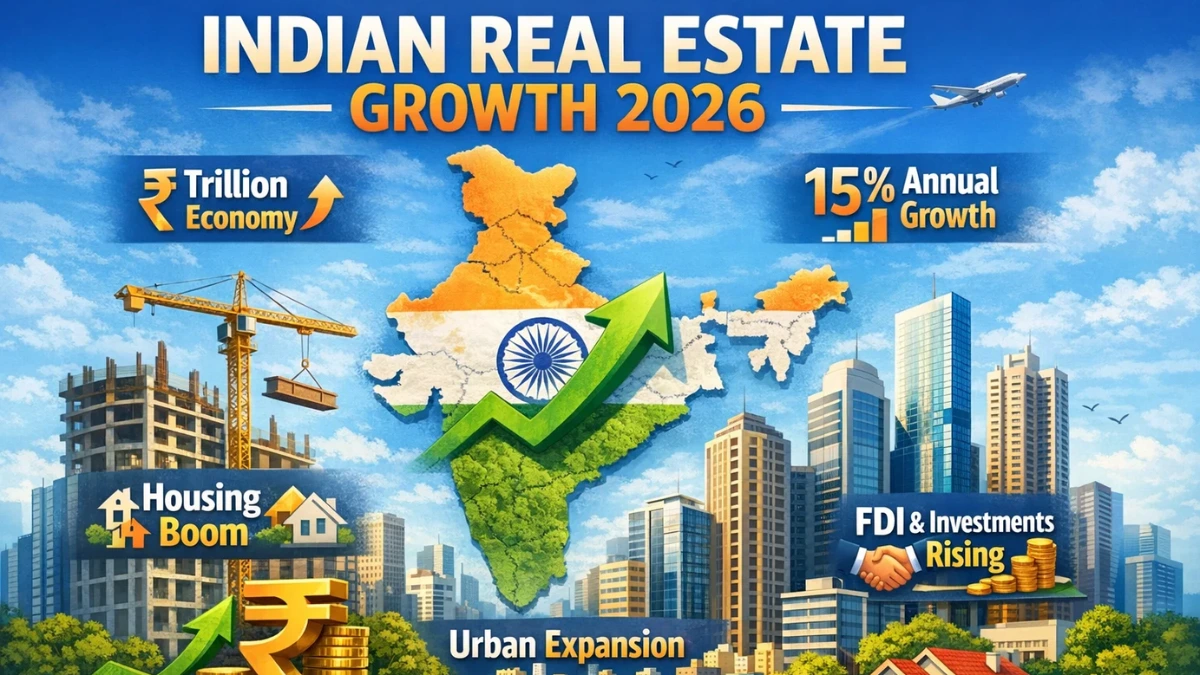
India’s real estate sector is entering 2026 with strong momentum, driven by rising urbanization, infrastructure expansion, improved transparency, and sustained buyer confidence. After several years of structural reforms and post-pandemic recovery, the housing market is showing resilience across both metro cities and emerging Tier 2 and Tier 3 markets.
Home sales volumes, new launches, and price appreciation trends indicate that the Indian residential market is evolving into a more organized and demand-driven ecosystem.
Strong Home Sales Momentum
In recent years, residential property sales across major cities such as Mumbai, Delhi-NCR, Bengaluru, Hyderabad, and Pune have remained robust. Demand has been supported by:
Growing end-user interest
Stable employment growth in IT and services sectors
Improved buyer sentiment
Better financing access
Moderate price appreciation compared to income growth
The luxury and premium housing segments have recorded particularly strong growth, while mid-income housing continues to see steady absorption.
Rise of Premium and Luxury Housing
One of the most notable trends heading into 2026 is the surge in demand for high-end properties. Wealth creation, startup success stories, and rising disposable incomes have pushed luxury home sales to record levels.
Buyers are prioritizing:
Larger living spaces
Gated communities
Lifestyle amenities
Prime city locations
Smart home features
Luxury housing is no longer limited to Mumbai and Delhi; cities like Hyderabad and Bengaluru are witnessing rapid growth in premium residential sales.
Affordable Housing Demand
Affordable housing continues to remain a core pillar of the Indian real estate market. Government initiatives, housing subsidies, and easier loan access have helped boost demand in the ₹25–60 lakh segment.
Tier 2 cities such as Lucknow, Indore, Jaipur, Coimbatore, and Ahmedabad are emerging as affordable housing hubs due to:
Lower land costs
Improved infrastructure
Growing job opportunities
Better connectivity
Affordable housing demand is increasingly driven by first-time homebuyers and salaried professionals.
Impact of Infrastructure Development
Infrastructure development is playing a transformative role in boosting property demand.
Key growth drivers include:
New metro rail projects
Expressways and highways
Airport expansions
Smart city initiatives
Industrial corridors
Improved connectivity increases property values in peripheral areas and encourages residential expansion beyond traditional city centers.
Shift Toward End-User Driven Market
Unlike the speculative cycles of the past, the current real estate growth phase is largely end-user driven.
Buyers are focused on:
Ready-to-move-in properties
Trusted developers
RERA-registered projects
Long-term ownership
The implementation of RERA (Real Estate Regulatory Authority) has significantly improved transparency, boosting buyer confidence and reducing project delays.
Price Trends and Appreciation
Property prices in India have shown gradual and sustainable growth rather than sharp spikes. Key trends include:
Moderate appreciation in metro cities
Stronger percentage growth in Tier 2 markets
Higher price growth in luxury segments
Stable rental yields in urban hubs
Limited unsold inventory in several cities has supported price stability heading into 2026.
Technology and Digital Transformation
Digital platforms, virtual property tours, AI-based pricing tools, and online documentation are reshaping how homes are bought and sold.
Developers are increasingly using:
Digital marketing strategies
Online booking systems
Virtual site visits
Data-driven pricing models
This digital shift has improved transaction speed and transparency.
Investment Trends in 2026
Real estate continues to be viewed as a stable long-term investment in India.
Key investment trends include:
Increased NRI participation
Growth in REIT awareness
Rising rental housing demand
Co-living and managed rental models
With equity markets showing volatility, real estate remains a preferred asset class for wealth preservation.
Challenges to Watch
Despite strong growth, the market faces certain challenges:
Interest rate fluctuations
Construction cost increases
Regulatory compliance requirements
Land acquisition complexities
However, compared to earlier cycles, the sector is more financially disciplined and structured.
2026 Market Outlook
Looking ahead, Indian real estate growth in 2026 is expected to remain positive.
Key expectations include:
Steady home sales growth
Continued luxury demand
Expansion in Tier 2 cities
Moderate price appreciation
Increased institutional investment
If economic growth remains strong and interest rates remain stable, the residential sector could see sustained expansion over the next few years.
Conclusion
India’s real estate market in 2026 reflects maturity, transparency, and stable demand fundamentals. With strong infrastructure development, rising urban incomes, and evolving buyer preferences, home sales are expected to maintain an upward trajectory.
The market is shifting toward quality-driven, end-user-focused growth — creating a healthier and more sustainable real estate environment across the country.
Tags: Indian Real Estate 2026, Home Sales India, Housing Market Trends India, Luxury Housing Growth India, Affordable Housing India, Tier 2 City Property Market, Real Estate Investment India, Property Price Trends India, Residential Market Outlook 2026, India Housing Demand