

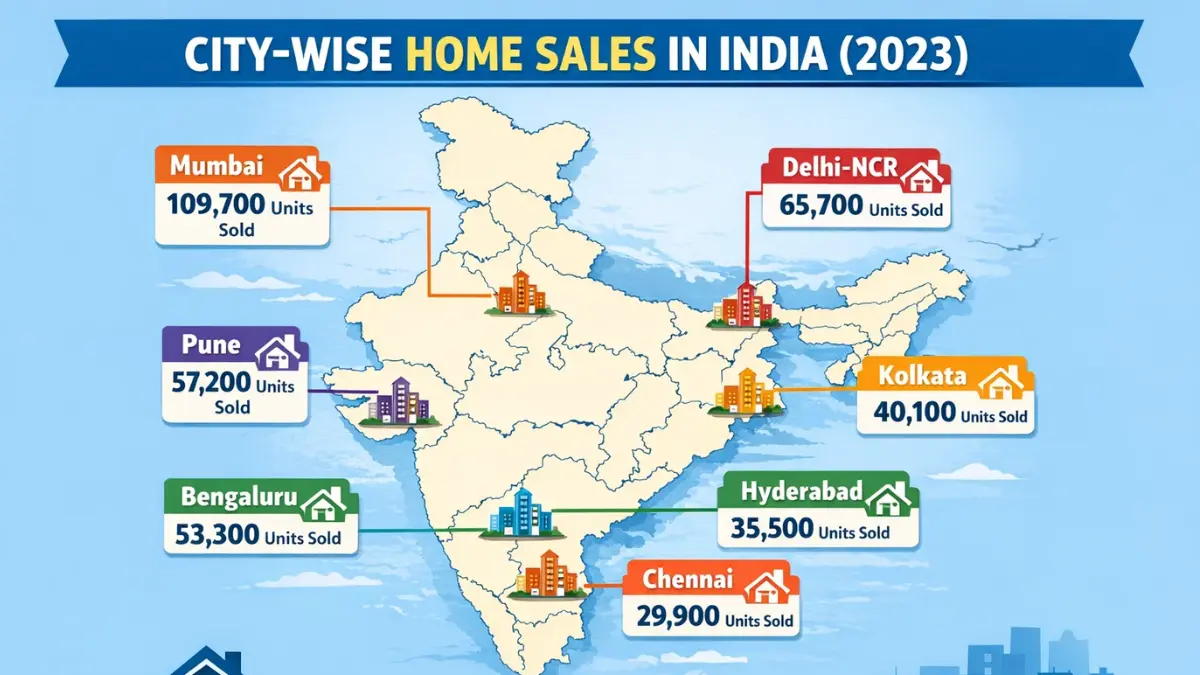
India’s residential real estate landscape is shaped significantly by city-level demand. While national figures provide an overall direction, individual cities reveal unique growth patterns based on employment hubs, infrastructure developments, affordability, and buyer preferences. In 2025–2026, several Indian cities stood out as top performers in home sales, reflecting both enduring demand and evolving market dynamics.
Mumbai Metropolitan Region (MMR)
The Mumbai Metropolitan Region remains India’s largest and most active real estate market. Known for its strong employment base, financial sector presence, and aspirational demand, Mumbai consistently ranks among the top in annual home sales.
Key strengths:
- High demand for mid-to-high-end and luxury segments
- Strong investor interest due to limited land supply
- Infrastructure projects such as metro expansions and coastal connectivity
- Sustained sales in both resale and new launches
Despite higher price points compared to other cities, Mumbai’s market remains resilient due to its status as a global economic center.
Delhi-NCR (National Capital Region)
The Delhi-NCR region — including Gurgaon, Noida, and Greater Noida — consistently ranks among India’s top real estate performers.
Why it leads:
- Large population and employment centers
- Proximity to government, corporate offices, and growing IT/tech hubs
- Strong infrastructure connectivity (metro, expressways)
- Diverse inventory catering to affordable, mid-segment, and luxury buyers
Affordable and mid-end homes continue to attract first-time buyers, while luxury properties support premium demand.
Bengaluru
Bengaluru remains one of India’s fastest-growing residential real estate markets.
What drives sales:
- IT and tech employment growth
- Young professional population seeking homeownership
- Robust rental ecosystem supporting investor interest
- Strong demand in micro-markets like Sarjapur Road, Whitefield, and North Bangalore
Bengaluru’s mix of employment stability and lifestyle offerings makes it a magnet for both end-users and investors.
Hyderabad
Hyderabad has emerged as a real estate powerhouse over the past decade, consistently delivering strong city-wise home sales figures.
Key factors:
- Continued IT and services sector expansion
- Affordable pricing compared to metro peers
- Large organized residential supply
- Rapid infrastructure development (metros, ring roads)
Hyderabad’s relatively balanced affordability and job growth have made it a top choice for homebuyers nationwide.
Pune
Pune has shown impressive home sales growth, driven by its strong educational institutions, IT hubs, and manufacturing base.
Drivers of demand:
- Strong IT and corporate influx
- Appealing lifestyle for families and professionals
- Rapid suburban expansion
- Rising demand in both affordable and mid-income segments
Local infrastructure projects and road connectivity improvements have further enhanced Pune’s real estate appeal.
Chennai
Chennai’s residential market has gained traction due to stable economic indicators and diversified employment sectors.
Highlights:
- Automotive, IT, and manufacturing sectors supporting demand
- Growth in both affordable and premium segments
- Infrastructure investments in metro rail and coastal corridors
- Higher traction in South Chennai corridors
Chennai’s consistent home sales performance reflects sustainable demand across segments.
Ahmedabad
Ahmedabad has become a top performer among Tier-1 and emerging real estate markets, with strong growth in home sales.
Why it ranks high:
- Strong regional economy and manufacturing base
- Competitive property prices compared to other metros
- Increased buyer interest from western India
- Growing connectivity and urban expansion
Ahmedabad’s real estate market blends affordability with steady demand across residential segments.
Kolkata
Kolkata’s real estate market continues to show steady home sales performance, backed by a blend of tradition and emerging modern developments.
Market catalysts:
- Diverse housing options from affordable to premium
- Expanding peripheral areas with new projects
- Affordable land prices supporting supply growth
- Growing demand from resident and investor communities
While not always at the very top, Kolkata remains a consistent contributor to national sales figures.
Tier II and Emerging Markets
Alongside these major centers, several Tier-II cities are rapidly gaining traction:
- Lucknow: Infrastructure growth and rising employment opportunities
- Indore: Urbanization driving residential demand
- Coimbatore: Balanced affordability and quality of life
- Jaipur: Connectivity improvements and new development corridors
These emerging markets are increasingly attracting end-users and investors seeking value and long-term appreciation.
Factors Behind City-Wise Performance
City-level home sales trends are shaped by several common factors:
1. Employment Growth: Cities with strong job markets, especially in technology, manufacturing, and services, attract homebuyers.
2. Infrastructure Development: Metro connectivity, highways, and urban planning boost residential demand.
3. Affordability: Price points relative to income levels influence buyer decisions.
4. Supply Diversity: A mix of affordable, mid-segment, and luxury inventory enhances market depth.
5. Investor Confidence: Transparent regulations and organized supply attract investment capital.
Conclusion
City-wise home sales in India reveal a diverse and resilient real estate market. While traditional giants like Mumbai, Delhi-NCR, Bengaluru, and Hyderabad continue to lead, cities such as Pune, Chennai, and Ahmedabad are showing strong and sustainable growth.
Additionally, Tier-II cities are emerging as attractive alternatives due to their affordability, connectivity, and rising employment prospects. As India’s urban landscape evolves through 2026, localized trends will continue shaping opportunities for buyers and investors alike.