

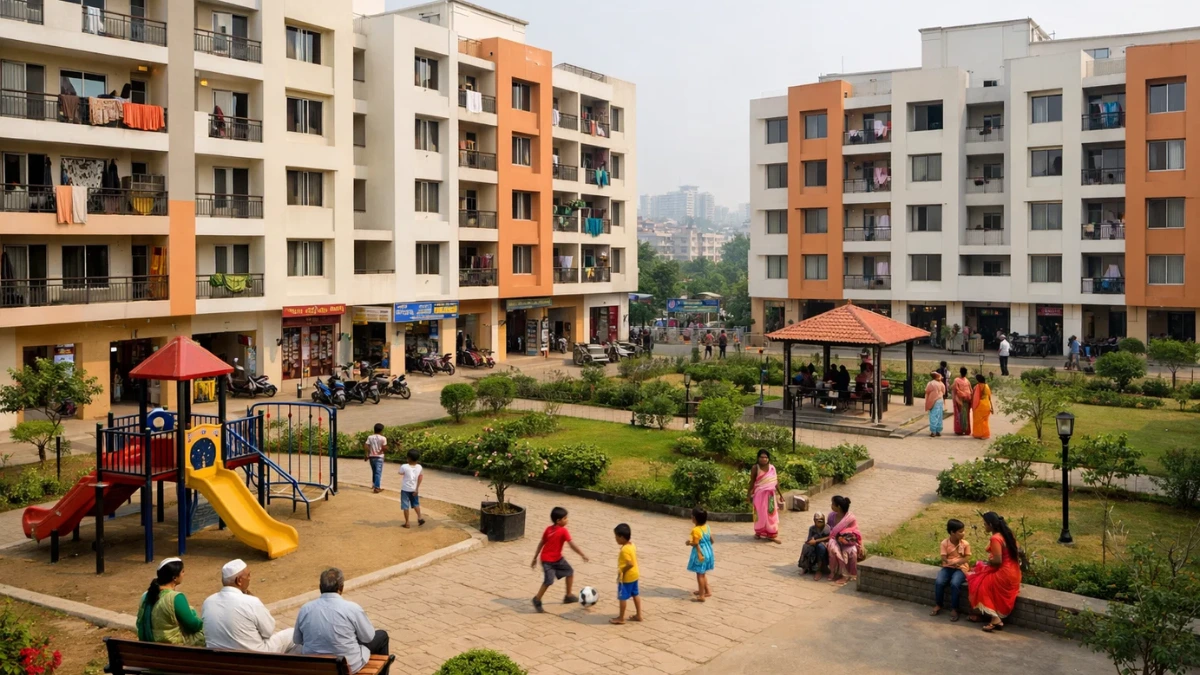
Affordable housing in India has become one of the most significant and transformative segments of the residential real estate market. Fueled by rapid urbanization, demographic shifts, government support, and changing buyer preferences, affordable homes are playing a central role in addressing India’s housing needs.
Understanding Affordable Housing in India
“Affordable housing” in India generally refers to residential units priced at entry-to-mid price points that are accessible to the broad middle class and first-time buyers. Though definitions vary by city and region, properties typically priced below ₹50 lakh to ₹70 lakh fall into this category in most urban markets.
This segment is particularly crucial for young families, salaried professionals, and households seeking financial stability through homeownership.
1. Demand Trends in Affordable Housing
Rapid Urbanization & Population Growth
India’s urban population continues to expand rapidly, with millions moving into cities in search of employment, education, and better quality of life. This expanding urban base is a key driver of affordable housing demand.
Young professionals and first-time buyers are especially prominent in this trend, seeking value-for-money homes close to employment hubs.
Rising Middle Class and Aspirations
India’s growing middle class is increasingly interested in homeownership as a means of financial security and social mobility. Owning a home is often considered a long-term investment and life milestone, which further boosts demand for affordable units.
Government Support and Incentives
Government initiatives such as PMAY (Pradhan Mantri Awas Yojana) and priority lending rates for affordable homes have made homeownership more attainable for many households. These policies have incentivized both developers and buyers to participate in the affordable segment.
Financial Accessibility
Lower interest rates on home loans, longer repayment tenures, and affordable EMI options have further encouraged buyers to consider affordable housing—particularly in tier-II and tier-III cities where cost pressures are lower.
2. Supply Dynamics of Affordable Housing
Developer Focus & Project Launches
In recent years, developers have increased the supply of affordable housing projects to meet demand. Many residential developers have specifically targeted mid-income buyers with product offerings tailored to affordability.
This has led to increased launches in emerging urban corridors and new micro-markets surrounding major cities.
Infrastructure Expansion
Improved infrastructure—such as metro rail extensions, highway connectivity, and public utilities—has expanded the geographic availability of affordable housing. Areas once considered peripheral are now accessible and attractive due to reduced commute times and improved amenities.
Challenges in Supply Execution
Despite strong demand and developer interest, supply challenges persist:
- Land availability and cost pressures in key urban centers restrict the number of affordable projects.
- Regulatory and approval delays can slow down project delivery timelines.
- Cost of construction and labor shortages impact overall project viability.
Efforts by state and local governments to streamline approvals and reduce regulatory bottlenecks are critical for improving affordable housing supply.
3. Sales Trends in Affordable Housing
Resilient Sales Performance
While overall residential sales volumes have shown mixed trends in recent years, the affordable segment has remained relatively resilient. Buyers in this category are often end-users rather than investors, which results in more stable sales patterns that are less sensitive to short-term price fluctuations.
Role of Tier-II and Tier-III Cities
Affordable housing demand and sales have grown especially strong in tier-II and tier-III cities. These markets offer comparatively lower land and construction costs, enabling developers to price homes within reach of middle-income buyers. Cities such as Ahmedabad, Pune, Lucknow, Kochi, and Indore are emerging as key affordable housing hubs.
The shift of demand towards these cities has helped improve absorption rates in the affordable segment even as larger cities face pricing pressures.
First-Time Buyers Lead the Segment
Affordable housing continues to attract first-time homebuyers, who are more financially motivated and seek long-term stability. These buyers often prioritize EMI-friendly properties with good connectivity to jobs and essential services.
Sales Value Growth
Although volumes persist, the overall sales value of affordable housing has also risen, reflecting a combination of increased demand, rising construction costs, and price adjustments in some markets.
4. Pricing and Affordability Factors
Moderate Price Growth
Unlike premium housing segments, where price growth has been stronger, affordable housing prices have seen moderate appreciation. This controlled price growth helps the segment remain accessible to its target demographic.
However, in some markets, price increases due to land scarcity and rising materials costs have started to impact affordability slightly.
Affordability Index Considerations
Affordability indices—which compare median household income to home prices—indicate that in several cities, owning a home at traditional entry price points continues to require significant savings and financing support. This underscores the ongoing importance of affordable housing policies and financing mechanisms.
5. Challenges Facing Affordable Housing
Despite solid demand and developer focus, the segment still faces several hurdles:
- Financing gaps for lower-income groups who may struggle with down payments or loan approvals.
- Infrastructure deficits in rapidly expanding urban peripheries.
- Land availability constraints in key growth corridors.
- Delayed project delivery due to regulatory or labor challenges.
Addressing these challenges requires coordinated efforts from policymakers, developers, financing institutions, and urban planners.
6. Future Outlook
The outlook for affordable housing in India remains optimistic and growth-oriented:
- Continued urbanization and employment growth will keep driving demand.
- Government policies and incentives are expected to evolve further in favor of affordable projects.
- Expansion of public and private financing options may help widen access for more buyers.
- Tier-II and tier-III cities will play a larger role in shaping future housing demand.
In the coming years, affordable housing is likely to remain one of the most influential segments in India’s residential real estate landscape, both in terms of sales and social impact.
Conclusion
Affordable housing is not just a market segment—it is a key driver of India’s residential real estate economy. Supported by demographic demand, government incentives, and evolving buyer preferences, the segment continues to grow despite market challenges.
Sales remain strong, especially in tier-II and tier-III cities, and supply is gradually expanding, guided by developer interest and improved infrastructure connectivity. As India’s housing needs evolve, affordable housing will continue to be central to closing the homeownership gap and shaping long-term residential trends.