

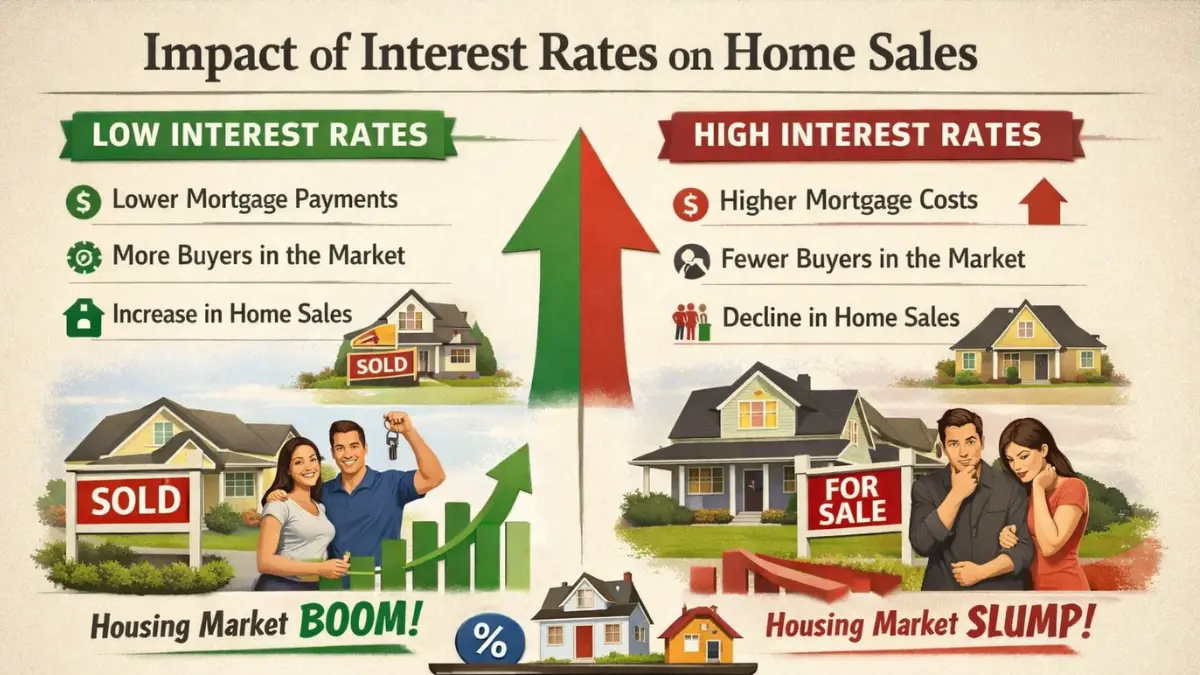
Interest rates are one of the most influential factors shaping residential real estate markets worldwide. In both India and the United States, changes in interest rates directly influence homebuyer affordability, demand levels, sales volumes, pricing trends, and market sentiment. While the underlying mechanisms are similar, there are important differences in how interest rate movements impact home sales in each country due to structural, cultural, and financial system variations.
1. How Interest Rates Affect Home Sales
Interest rates determine the cost of borrowing for buyers. In most markets, a large proportion of home purchases are financed through loans. When interest rates rise, the cost of servicing those loans increases — which can reduce buying power, slow sales, and dampen price growth. Conversely, when rates decline, borrowing becomes cheaper and demand tends to strengthen.
Key ways interest rates affect home sales:
- Monthly Payments: Higher rates increase monthly EMIs (Equated Monthly Installments) or mortgage payments, reducing affordability.
- Loan Eligibility: With higher rates, buyers qualify for smaller loans at the same income level.
- Market Velocity: Lower rates often stimulate more buying activity and faster sales cycles.
- Investor Behavior: Interest rates influence returns on alternative investments, affecting how investors allocate capital.
2. Impact of Interest Rates on Home Sales in India
A. Structure of Home Loans in India
In India, most home loans are offered with floating interest rates that move with changes in the Reserve Bank of India (RBI) policy rates and money market conditions. A rise or cut in policy rates quickly reflects in loan repayments.
Key impacts:
Affordability & Buyer Demand
When rates rise:
- Monthly EMIs increase, especially on large loan amounts.
- First-time buyers may delay purchases or opt for smaller homes.
- Demand in lower and mid-income segments can soften.
When rates decline:
- EMIs reduce, enhancing affordability.
- Buyers feel more confident pulling the purchase trigger.
- Demand rises, particularly in entry and mid-segments.
Developer Pricing & Project Launches
Higher interest rates can lead to higher construction finance costs for developers, sometimes resulting in higher property prices or delayed launches.
Loan Uptake Trends
In rising rate cycles, loan uptake may slow as buyers reassess affordability. In easing cycles, banks often see higher demand for housing loans with increased inquiries and approvals.
Impact on Different Segments
- Affordable & Mid-Segment: More sensitive to interest rate changes.
- Luxury Segment: Less interest-rate sensitive, often driven by wealth preservation, not monthly affordability.
Recent Indian Market Example (2024–25)
When the RBI kept rates elevated for inflation control, housing affordability was pressured — and sales in lower price ranges slowed. However, premium and luxury segments remained resilient.
3. Impact of Interest Rates on Home Sales in the USA
A. Structure of Home Loans in the U.S.
In the U.S., a large share of buyers use fixed-rate mortgages, especially 30-year fixed loans. These locks in interest rates for the life of the loan — giving buyers payment predictability.
Key impacts:
Affordability & Purchasing Power
When mortgage rates rise:
- Buyers see higher monthly payments.
- Qualified loan amounts decrease.
- First-time buyers feel the greatest impact.
- Buyers may opt for lower-priced homes, smaller markets, or alternative financing.
Existing vs New Home Sales
Higher rates often affect existing home sales faster because many buyers consider resale inventory first. New construction activity may attract buyers through builder incentives (rate buydowns, closing cost assistance) to soften the impact.
Lock-In Effect
A unique U.S. market impact is the mortgage rate lock-in. Homeowners with low existing rates (from previous years) may postpone selling because moving to a new home means giving up their favorable rate — effectively reducing inventory. Less inventory contributes to slower home sales volumes.
Investor Demand
Real estate investors react to yield comparisons. Rising rates make alternative investments (bonds, savings) more attractive, potentially reducing investor purchases in housing.
4. Comparing India and the USA: Key Differences
| Feature | India | USA |
|---|---|---|
| Loan Type | Predominantly floating rates | Predominantly fixed rates (30-year) |
| Rate Reflection | Changes quickly pass through | Buyers locked in older rates |
| Lock-In Effect | Limited | Significant (reduces resale inventory) |
| Affordability Sensitivity | High for mid/low income | High for first-time buyers |
| Investor Impact | Moderate | Strong influence on investor demand |
| Market Maturity | Emerging, higher future growth potential | Mature, cyclical |
5. Common Effects of Rate Changes in Both Markets
A. Affordability Pressure
Higher rates reduce the price range buyers can afford — often slowing sales among first-time and budget-conscious buyers.
B. Shift to Alternate Segments
Buyers may move from high-priced homes to more affordable regions or smaller properties, adjusting their purchase decisions based on financing costs.
C. Reduced Buying Urgency
When rates are rising or volatile, buyers may delay decisions, waiting for stabilization or rate cuts.
D. Policy Sensitivity
Both markets respond to central bank or federal rate signals regarding inflation, economic growth, and monetary policy.
6. Impact on Sales Volume and Inventory
India
Rate hikes can cause short-term demand slowdown but often rebound when rates stabilize or decline. Developers in key cities continue launching projects as long as buyer interest holds.
USA
Longer lock-in periods due to fixed mortgages can reduce resale listings, tightening inventory and slowing sales volumes. Higher rates also reduce turnover as existing homeowners delay selling.
7. Outlook for 2026
India
If interest rates remain stable or trend downward:
- Housing demand — especially for affordable homes — could strengthen.
- Sales volumes may rise.
- Home prices may stabilize or appreciate moderately.
USA
If mortgage rates ease:
- First-time buyer participation could increase.
- Inventory could expand as more homeowners list properties.
- Sales volumes could rise from the lows seen earlier in 2026.
If rates stay high:
- Affordability remains a limiting factor on sales.
- Price growth might slow, not decline sharply.
- Investors may focus more on rental property opportunities.
Conclusion
Interest rates are a primary driver of home sales dynamics in both India and the United States — but the mechanics differ due to the nature of credit markets, mortgage products, and buyer behavior.
In India, floating rates mean borrowers feel rate changes quickly, affecting affordability and purchase decisions directly. In the USA, fixed-rate structures lead to a “lock-in effect” that can limit resale activity while shaping buyer choices over a long period.
For buyers, sellers, and investors in both countries:
- Lower or stable interest rates typically boost affordability and sales activity.
- Higher rates constrain demand, slow transactions, and elevate negotiation power for buyers.
- Understanding the rate environment is essential before entering major purchase or investment decisions.