

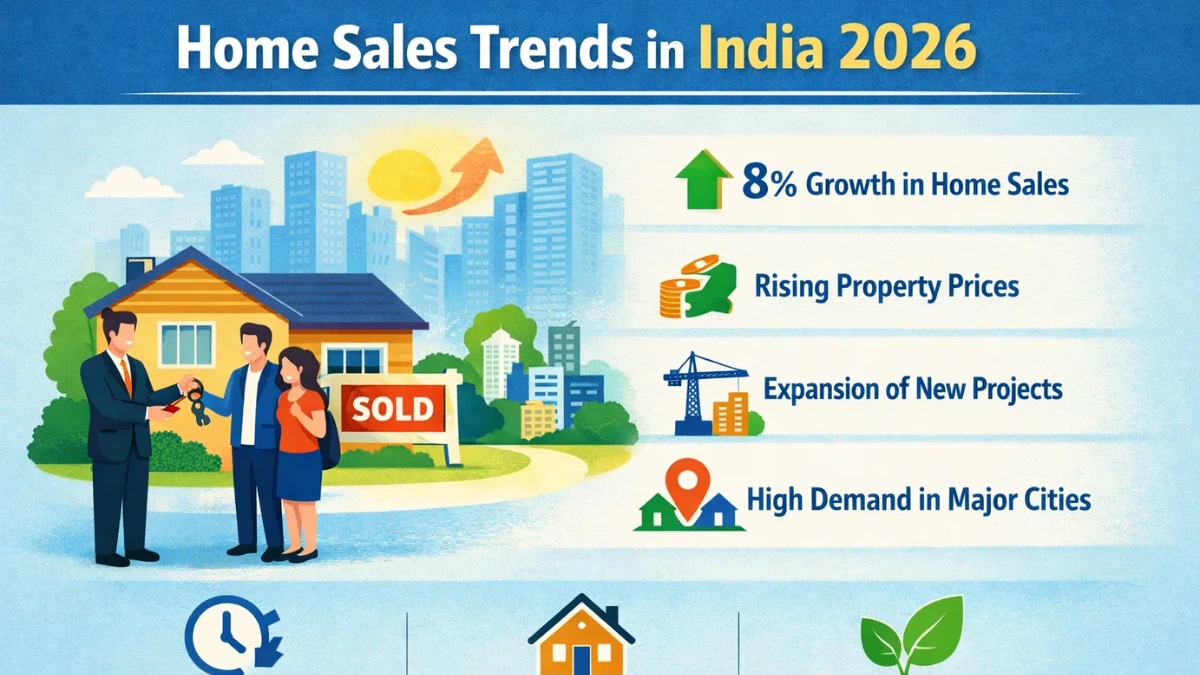
India’s housing market continues to evolve rapidly in 2026. Fueled by changing buyer preferences, shifting economic conditions, and advancements in technology, the sector is entering a phase where value, lifestyle demands, and demographic shifts are reshaping how homes are bought and sold. From rising sales value to mixed signals on volume growth, the trends reveal both optimism and caution among developers and buyers alike.
1. Growth Overview — Sales Value Up, Volumes Mixed
One of the most striking trends in India’s 2026 home sales is the disconnect between sales value and unit volumes:
- Sales value is projected to surge, with homes worth around ₹6.65 lakh crore expected to be sold in FY26 — a jump of nearly 19–20% year-on-year in total value. This is largely due to higher prices and luxury segment dominance rather than a significant rise in the number of homes sold.
- While total units sold in major cities have shown steady numbers of about 0.3–0.4 million units annually, the number of individual home sales has not grown as rapidly as value, indicating price inflation and product mix changes rather than broad volume growth.
This means the market is “getting richer but not necessarily bigger,” with stronger value growth than volume expansion.
2. Demand Patterns — Premium Leads, Affordable Rises Slowly
🔹 Luxury & Premium Demand
- Premium and luxury homes are the primary growth drivers — often contributing more than half of sales value in top cities. Buyers are increasingly prioritizing amenities, space, and lifestyle attributes, elevating demand for high-end residential products.
- Luxury segments have been strong in metros like NCR, Chennai, Bengaluru, and Hyderabad, with wealthy end-users and NRIs continuing to participate actively — especially in branded and curated projects.
🔹 Affordable & Mid-Segment Homes
While premium housing leads value growth, demand for affordable and mid-range homes remains important:
- In places like Ahmedabad, homes in the ₹50 lakh-₹1 crore segment accounted for a significant share of sales in late 2025 — indicating that the core homebuyer market still values affordability.
- However, affordability pressures continue to restrain volume growth overall, especially in markets where prices have outpaced incomes.
3. Price Trends — Expect Continued Appreciation
Experts and developers broadly believe that housing prices in India are likely to appreciate in 2026:
- Nearly 70% of developers surveyed foresee home prices increasing by more than 5% in 2026, with some expecting growth in the 5–10% range or more. This reflects ongoing confidence in demand fundamentals and project pricing strategies.
- Broader industry forecasts also point to consistent price growth, supported by rising incomes, improving infrastructure, and government initiatives that make home buying easier for many segments.
This price growth is a key factor behind the boost in sales value, even when the number of units sold shows only modest growth.
4. Emerging Drivers — Technology, Tier II/III Cities & Changing Buyer Behavior
📌 Digital Transformation
The real estate purchase process is being reshaped by digital platforms:
- Homebuyers — especially Millennials and Gen Z — now use online listings, virtual tours, and digital financing tools to make faster decisions. This trend is accelerating transparency and convenience in the market.
📌 Tier II & III Cities Rising
Developers are shifting focus beyond traditional metros, recognizing growth opportunities in:
- Tier II and Tier III cities where cost pressures are lower and where infrastructure improvements are expanding residential appeal.
Cities like Ahmedabad, Pune, Lucknow, and Kochi are seeing greater interest from both end-users and investors as urban spill-over expands.
5. Challenges & Risks Ahead
Despite overall positive momentum, the market also faces several challenges:
⚠️ Affordability Concerns
Rising prices may deter first-time buyers in key markets, potentially slowing sales volumes even if value continues to grow.
⚠️ Inventory Build-Up
In several major cities, unsold housing stock has risen, sometimes due to price mismatches and slower absorption rates — a trend many analysts are watching closely.
⚠️ Economic Sensitivities
Slower growth in sectors like IT — a major employment driver — could modestly dampen housing demand in certain ecosystems.
These risks underscore the importance of balanced supply strategies and pricing discipline by developers.
6. Future Outlook — What to Expect Going Forward
📈 Steady Growth, But More Balanced
Looking ahead in 2026 and beyond:
- Demand is expected to remain stable, supported by favorable demographics, rising income levels, and improved financing options.
- Developers will continue investing in diversified product portfolios, including premium, mid-segment and even boutique projects.
- Digital technology will further enhance transparency and buyer experience.
- The market is likely to see incremental growth in new launches as cities expand and homebuyers seek combinations of value, space, and lifestyle.
Conclusion
India’s home sales landscape in 2026 is marked by a blend of optimism and transformation. While total unit sales may not surge dramatically, the market’s value growth — driven by luxury demand and rising prices — points to sustained confidence. Affordability pressure, rising inventory, and price sensitivities present challenges, but improved infrastructure, digital adoption, and preference shifts in favor of new-age housing products are strengthening the sector’s future outlook.
For potential buyers, investors, and developers, 2026 represents a market of evolving opportunities — one that balances traditional housing needs with lifestyle and investment aspirations.
Frequently Asked Questions (FAQs)
1. Is India’s housing market still growing in 2026?
Yes — while unit sales are steady, total sales value is growing significantly, mainly due to rising home prices and increased demand for premium properties.
2. Which segment is driving home sales growth?
Premium and luxury segments are the main drivers, contributing a large share of sales value, even as mid and affordable segments remain important.
3. Are housing prices expected to rise further?
Most developers and analysts expect home prices in India to appreciate in 2026 due to demand, construction costs, and improved infrastructure.
4. What role does technology play in home buying trends?
Digital platforms and tools are making home search, comparisons, and financing easier, especially for younger buyers.
5. Are Tier II and III cities catching up to metro trends?
Yes — these cities are gaining attention due to affordability, infrastructure upgrades, and expanding job markets.