

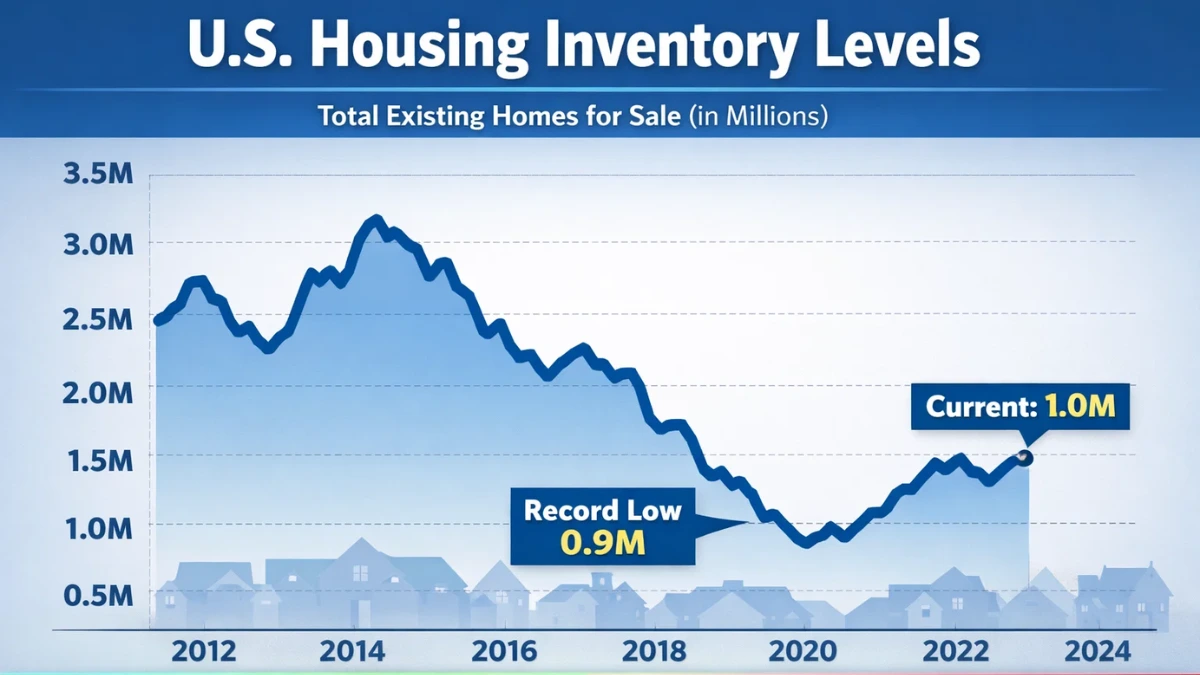
Housing inventory is one of the most important indicators in the U.S. real estate market. It directly influences home prices, buyer competition, sales speed, and overall market balance. When inventory is tight, sellers gain the advantage. When inventory rises, buyers gain negotiating power.
In 2025–2026, U.S. housing inventory remains a central theme shaping home sales trends. Understanding how inventory levels work — and how they affect the broader housing ecosystem — helps buyers, sellers, and investors make smarter decisions.
What Is Housing Inventory?
Housing inventory refers to the total number of homes actively listed for sale at a given time. It is typically measured in two key ways:
Number of active listings
Months of supply (also called months of inventory)
Months of supply measures how long it would take to sell all current homes on the market at the current sales pace. A balanced market is generally considered to have about 5–6 months of supply.
Less than 4 months indicates a seller’s market.
More than 6 months indicates a buyer’s market.
Current Inventory Trends in the U.S.
In recent years, inventory levels have remained historically low compared to pre-2020 norms. Although supply has improved slightly, it is still constrained in many regions.
Several factors explain the inventory shortage:
Homeowners locked into low mortgage rates are reluctant to sell.
Underbuilding during the previous decade created structural supply shortages.
Strong demographic demand continues to absorb available listings quickly.
While inventory is gradually rising in some markets, it remains tight nationally, which supports price stability.
Why Inventory Levels Matter for Home Sales
Inventory plays a direct role in determining how quickly homes sell and at what price.
Low Inventory Effects
When supply is limited:
Homes sell faster, often within days or weeks.
Multiple offers become common.
Buyers may bid above asking price.
Price growth accelerates.
Low inventory typically leads to increased competition, pushing home prices higher and reducing buyer negotiating power.
High Inventory Effects
When inventory rises:
Homes stay on the market longer.
Price reductions become more frequent.
Buyers gain leverage in negotiations.
Sales pace may slow temporarily.
Higher inventory can cool price growth and create a more balanced environment.
The “Lock-In Effect” and Its Impact
One major reason inventory has remained tight is the mortgage rate lock-in effect.
Millions of homeowners secured ultra-low mortgage rates in 2020–2022. Selling their current home and purchasing another would mean taking on a significantly higher rate. As a result, many owners choose to stay put rather than move.
This reduces the number of resale listings, limiting available inventory even when buyer demand softens.
The lock-in effect is one of the most powerful forces shaping today’s housing supply dynamics.
New Construction and Inventory Relief
Homebuilders play a critical role in easing inventory shortages.
In many regions, new construction has increased to meet demand. Builders have offered incentives such as rate buydowns and closing cost assistance to attract buyers.
However, construction faces constraints:
Land availability
Zoning regulations
Labor shortages
Material costs
While new homes add supply, they have not fully closed the inventory gap created by years of underbuilding.
Regional Inventory Differences
Inventory levels vary significantly by region.
Sun Belt markets in states like Texas and Florida have seen inventory increase more noticeably due to strong construction activity.
Midwestern markets often maintain tight supply due to steady demand and slower new construction.
High-cost coastal markets may experience modest inventory gains, but affordability pressures can influence how quickly homes sell.
Because real estate is local, inventory conditions must be analyzed at the metro or neighborhood level rather than relying solely on national averages.
Inventory and Home Price Stability
One of the biggest reasons home prices have not declined sharply in recent years is limited inventory.
Even as mortgage rates increased and affordability worsened, supply shortages prevented widespread price drops. Instead, price growth slowed but remained positive in many areas.
If inventory were to rise sharply — for example, due to economic downturns or increased seller activity — price pressures could ease more significantly.
For now, controlled inventory levels continue to support pricing resilience.
Impact on First-Time Buyers
First-time buyers are especially affected by low inventory.
Entry-level homes are often in the shortest supply. Competition for affordable properties can be intense, pushing prices upward and making it harder for new buyers to enter the market.
When inventory expands — particularly in the starter home segment — affordability improves and sales activity often increases.
What Could Change Inventory Levels in 2026?
Several factors could shift inventory trends:
Mortgage rate declines that encourage more homeowners to list
Economic slowdown that forces some sellers into the market
Policy changes that ease zoning restrictions
Increased homebuilding activity
A meaningful drop in mortgage rates could reduce the lock-in effect and unlock additional listings, increasing resale inventory and boosting home sales volumes.
Long-Term Outlook
Over the long term, housing inventory must rise to meet demographic demand. The U.S. continues to face a structural housing shortage built over more than a decade.
Gradual inventory growth would likely create a healthier and more balanced housing market, with moderate price appreciation and improved affordability.
Sharp spikes in inventory, however, could temporarily pressure prices and slow sales activity.
Conclusion
Housing inventory levels are one of the most important drivers of U.S. home sales and price trends. Low inventory supports faster sales, stronger competition, and steady price growth. Higher inventory gives buyers more options and stabilizes pricing.
In 2025–2026, inventory remains constrained but is gradually improving in select regions. The balance between supply growth and buyer demand will determine whether the housing market remains seller-leaning or moves toward equilibrium.