

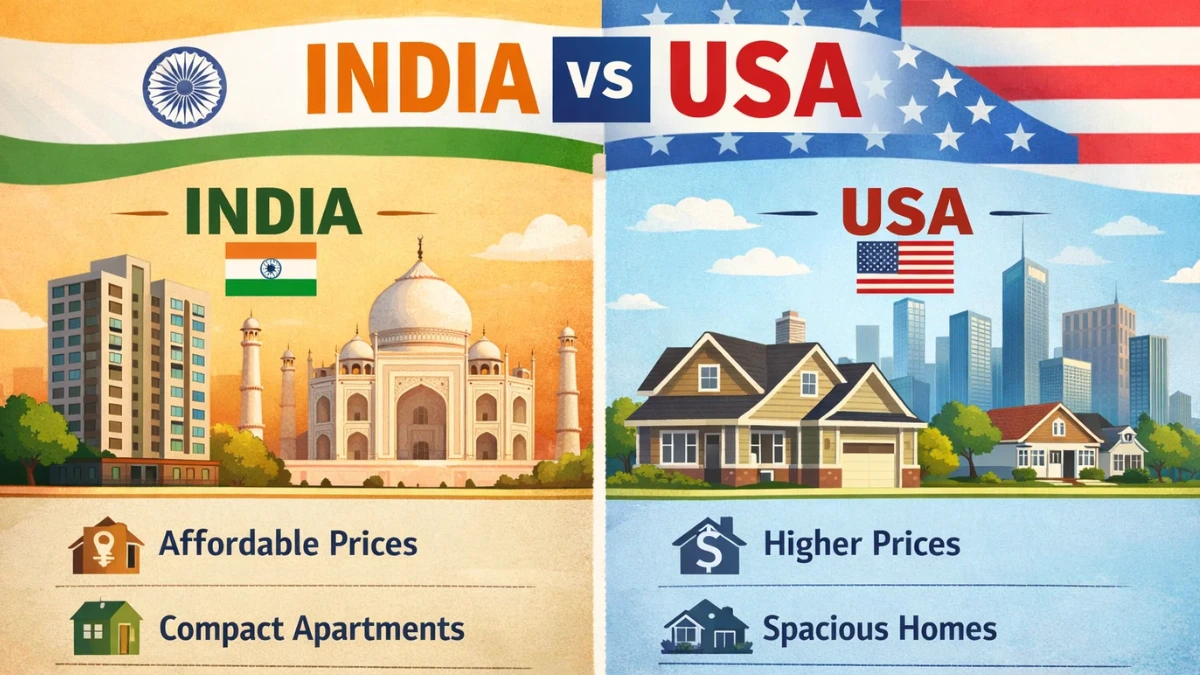
The real estate markets of India and the United States are among the most dynamic in the world. Both countries have large populations, expanding urban centers, and strong housing demand, yet their market structures, pricing patterns, financing systems, and buyer behaviors differ significantly.
In 2026, global investors, homebuyers, and analysts are closely watching how these two markets compare in terms of home sales, price trends, demand drivers, and future outlook. This detailed comparison explores the similarities and differences between India and the USA real estate sectors.
Market Size and Structure
India’s real estate market is one of the fastest-growing globally, driven by rapid urbanization, infrastructure development, and a rising middle class. Major cities such as Mumbai, Delhi, Bengaluru, and Hyderabad dominate home sales activity. The market includes affordable housing, mid-segment apartments, and a rapidly expanding luxury segment.
In contrast, the United States housing market is more mature and highly structured. Key metropolitan areas such as New York City, Los Angeles, Dallas, and Miami attract both domestic and international buyers. The U.S. market consists of single-family homes, condominiums, townhouses, and multifamily units, with strong secondary markets across suburban regions.
The U.S. market is larger in absolute dollar value, but India’s market is expanding at a faster growth rate due to demographic momentum and infrastructure expansion.
Home Sales Volume Comparison
Home sales volumes differ significantly between the two countries.
In the United States, annual existing home sales typically range in the millions, reflecting a high level of property turnover. The resale market plays a dominant role, with homeowners frequently upgrading, downsizing, or relocating.
India, on the other hand, sees lower transaction volumes relative to population size. A significant portion of home sales comes from newly constructed apartments rather than resale homes. Developers play a central role in driving supply and marketing new projects.
While U.S. housing markets rely heavily on resale transactions, India’s real estate activity is largely fueled by new project launches and pre-construction bookings.
Price Trends and Affordability
Affordability is a major factor in both countries, but the dynamics vary.
In the USA, home prices surged dramatically between 2020 and 2022. Since then, price growth has moderated. In 2026, home price appreciation is expected to remain in the low single digits in most regions. Mortgage rate fluctuations significantly influence affordability in the U.S., as buyers depend heavily on long-term fixed-rate home loans.
In India, property prices have shown steady appreciation, especially in metro cities. Luxury housing has driven overall market value growth. However, affordability concerns remain in major urban centers, where prices have risen faster than incomes in certain segments.
One key difference is financing structure. U.S. buyers often rely on 30-year fixed mortgages, providing predictable payments. In India, home loans are commonly offered with floating interest rates, making buyers more sensitive to policy rate changes.
Demand Drivers
Both countries share some common demand drivers, yet the scale and impact differ.
In India, demand is driven by rapid urbanization, a growing middle class, rising household incomes, and government incentives supporting home ownership. The younger population base ensures long-term housing demand. Additionally, Non-Resident Indians (NRIs) contribute significantly to luxury property purchases.
In the United States, demographic demand is fueled by Millennials entering peak home-buying years and Generation Z gradually entering the market. Remote and hybrid work trends have reshaped location preferences, boosting suburban and secondary city demand.
Population growth in India is higher than in the USA, giving India a stronger long-term demand trajectory.
Supply and Inventory Conditions
Supply dynamics present another contrast.
In the USA, housing inventory remains constrained in many regions due to underbuilding over the past decade. Many homeowners are reluctant to sell because they locked in historically low mortgage rates in earlier years.
In India, developers actively launch new residential projects to meet demand. However, certain cities experience inventory buildup in premium segments. Affordable housing shortages remain a challenge in both countries.
The U.S. faces supply constraints due to zoning restrictions and land limitations in key cities, while India deals more with execution delays, regulatory approvals, and infrastructure readiness.
Investment Opportunities
Real estate investors analyze both markets for different reasons.
The U.S. market is often viewed as stable and transparent, with well-regulated property laws and mature rental markets. Single-family rentals and multifamily investments are popular, particularly in high-growth states.
India offers higher growth potential, especially in emerging cities and expanding infrastructure corridors. Investors often target under-construction projects for appreciation gains. Rental yields in India can vary significantly by city, while U.S. rental markets often provide more predictable returns.
Foreign investment regulations are generally more structured and transparent in the USA, whereas India has restrictions on direct land purchases by foreign individuals.
Risk Factors
Each market carries its own risks.
In the United States, key risks include interest rate volatility, economic slowdowns, and regional oversupply in certain markets. Affordability pressures remain a major concern.
In India, risks include regulatory changes, construction delays, project execution challenges, and price sensitivity among middle-income buyers.
Currency fluctuations also affect cross-border investors comparing returns between the Indian rupee and the U.S. dollar.
Technology and Digital Transformation
Both markets are undergoing digital transformation.
In the USA, digital listings, AI-driven property valuation tools, and virtual tours have become standard. Online mortgage applications streamline the buying process.
India has also seen rapid digital adoption. Online property portals, digital documentation, and virtual site visits are becoming increasingly common, particularly among younger buyers.
Technology is narrowing the gap between the two markets in terms of transparency and accessibility.
Future Outlook
Looking ahead, both markets are expected to remain resilient but follow different growth paths.
India’s housing market is likely to experience higher percentage growth due to urban expansion, infrastructure investments, and demographic advantages.
The U.S. market is expected to show steady, moderate growth supported by strong institutional frameworks and mature financing systems.
Over the long term, India may offer faster capital appreciation potential, while the USA may offer greater stability and predictable returns.
Conclusion
The India vs USA real estate comparison reveals two strong but structurally different housing markets. The United States represents a mature, high-volume, mortgage-driven ecosystem with stable appreciation trends. India represents a fast-growing, developer-led market fueled by urbanization and rising incomes.